
Primary Sense CVD Risk Screening, Recall and Treatment Report now available

A new report in Primary Sense is now available to help general practices identify patients who may benefit from cardiovascular disease risk assessment, recall and treatment review.

The Primary Sense CVD Risk Screening, Recall and Treatment Report was released on 2 February 2026, providing general practices with a practical new tool to support cardiovascular disease prevention.

Available within Primary Sense, the report helps practices identify patients who may benefit from risk screening, recall and treatment review as part of routine preventive care.

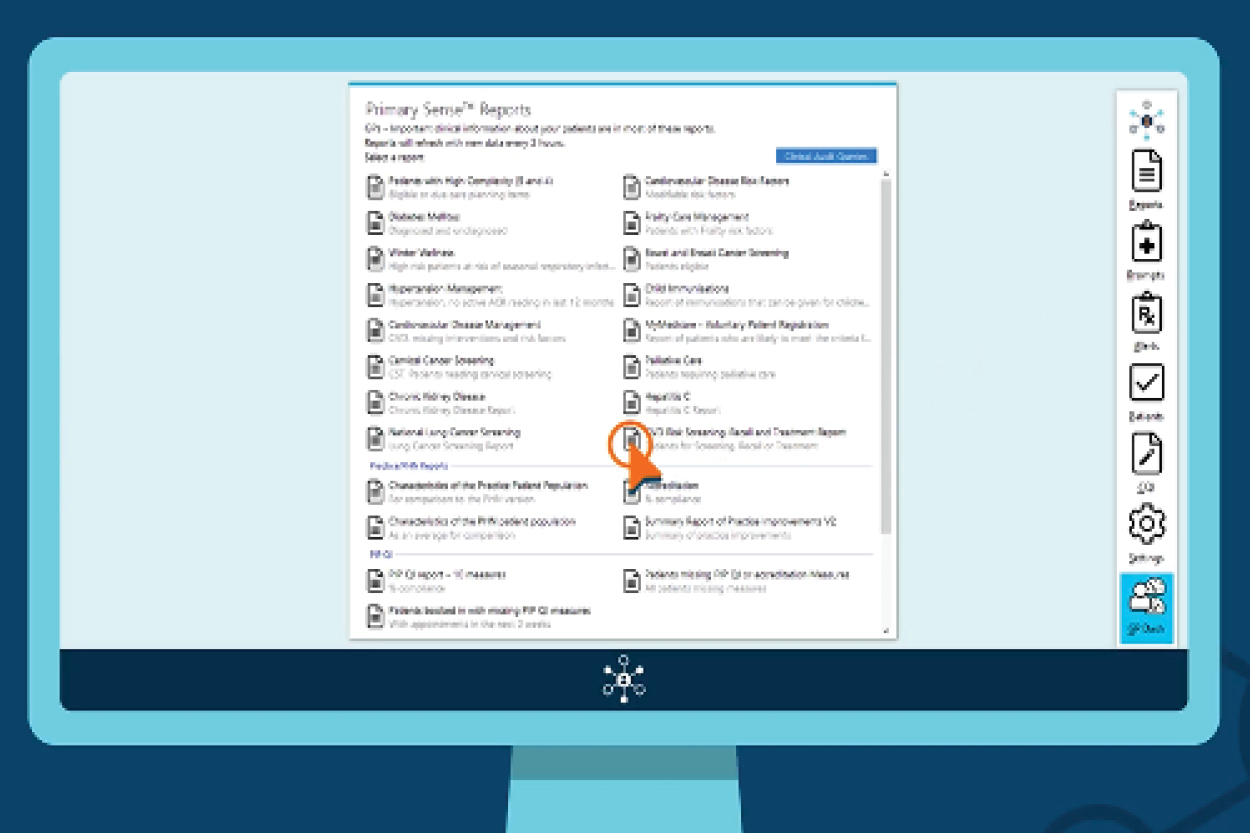
To access the report, click the Primary Sense icon Primary Sense icon on your clinical desktop or taskbar, then select the reports icon Reports icon from the expanded menu, then open the CVD Risk Screening, Recall and Treatment Report.


The report groups patients into four tables based on defined criteria, making it easier to identify those who may benefit most from early intervention. Practices can use the report to support planned recalls, care planning and medication review, or flag patients for follow-up at their next appointment.

Thank you to the PHASES Clinical Advisory Group, led by Professor Kim Greaves, for their work in defining the requirements for this report.
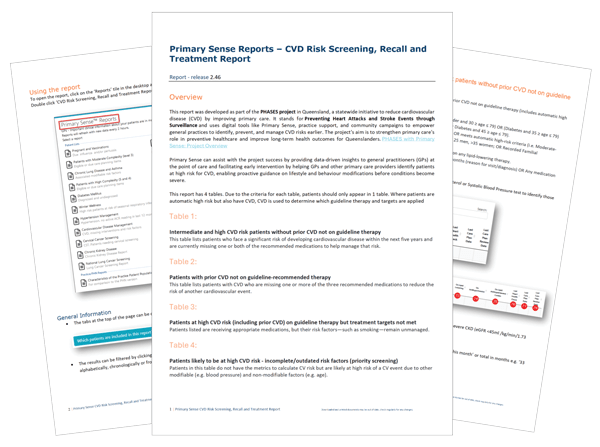
A supporting User Guide is also available on the PHASES resources page. The guide provides a walkthrough of the report and explains how it analyses your practice database for cardiovascular disease risk and care opportunities.

Cardiovascular disease remains one of the leading causes of illness and death in Australia. At its heart, PHASES is focused on preventing heart attacks and strokes by helping practices shift activity upstream through earlier, more targeted prevention. This includes increasing heart health screening for people at risk of CVD, and increasing recommended guideline therapy for people who already have a CVD diagnosis.

Strengthening preventive care in general practice supports earlier intervention and more effective management for patients at greatest risk of heart attack or stroke.

PHN teams across the state will be working with their local primary care services to explore how this report can support practices and patients.

Funded by the Queensland Health Clinical Research Fellowship, the PHASES Linkage project connects general practice cardiovascular disease (CVD) risk data with hospitalisation and mortality data. This study aims to better understand how CVD risk impacts hospitalisation rates and assess the accuracy of the new CVD risk prediction equation in identifying high-risk individuals within Queensland’s population. 

The project will: 

  • Estimate the number of heart attacks and strokes that could be prevented with improved treatment for high CVD risk. 
  • Identify gaps in CVD prevention to inform future care strategies. 

Running in parallel with the PHASES project, PHASES Linkage highlights the power of data-driven insights to improve cardiovascular outcomes and reduce hospitalisations.