
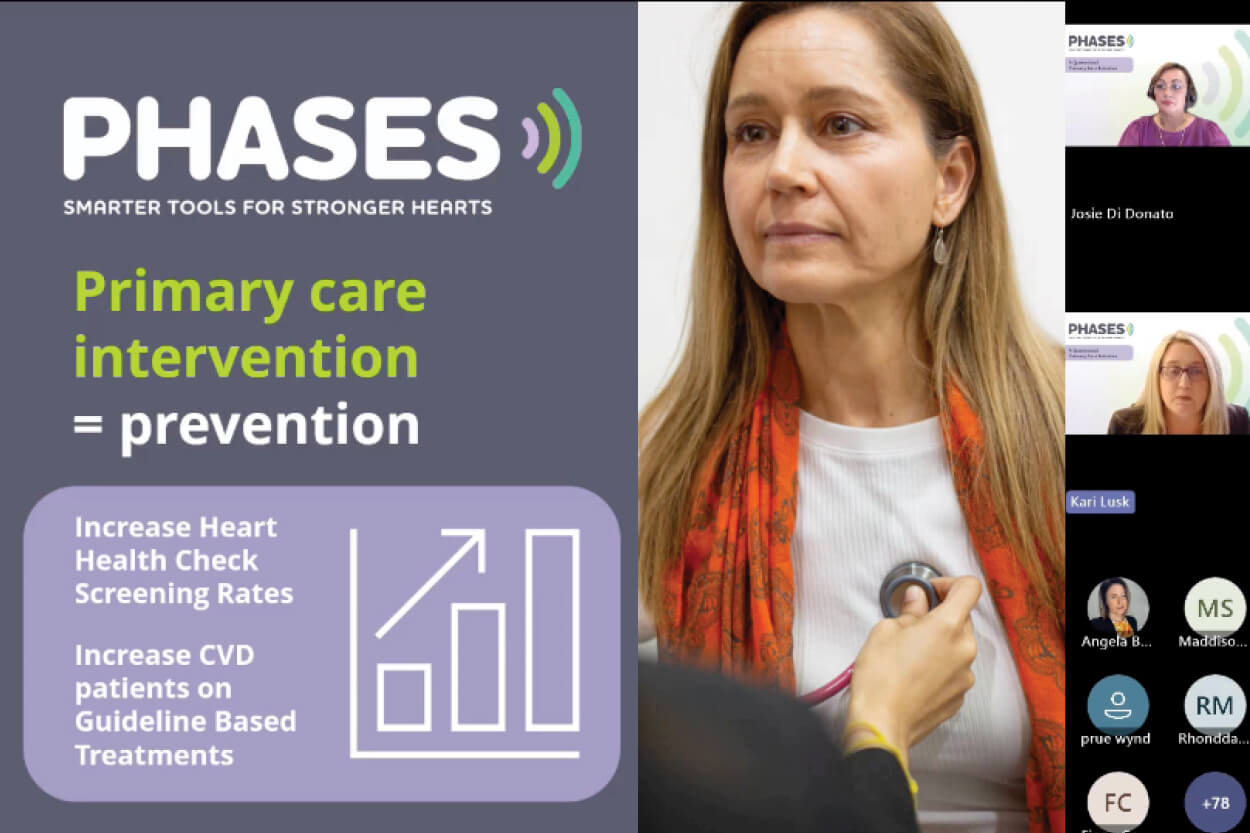
Presented by Kari Lusk from Montier Health, the February 2026 webinar focused on practical ways practices can use their data to identify patients at risk of cardiovascular disease and take structured action using the purpose-built PHASES CVD Quality Improvement Toolkit.
The session highlighted how quality improvement can help practices move from identifying risk to embedding prevention into routine workflows. With the right tools and processes in place, practice teams can more easily identify patients who may benefit from review, support timely recall and follow-up, and strengthen preventive care over time.
Learning objectives:
- Use practice data to identify patients at increased cardiovascular disease risk
- Apply the PHASES CVD Quality Improvement Toolkit
- Implement recall and follow up processes for high-risk patients
- Embed quality improvement into routine practice workflow
The webinar formed part of the PHASES statewide webinar series supporting primary care teams across Queensland to strengthen early identification and prevention of cardiovascular disease.
Click here if you missed the live session and would like to watch the recording, You can also self-claim RACGP and ACRRM CPD points after viewing.