

Resources
Everything you need to get started and keep going with PHASES, with practical resources to support whole-of-practice CVD prevention and risk assessment.
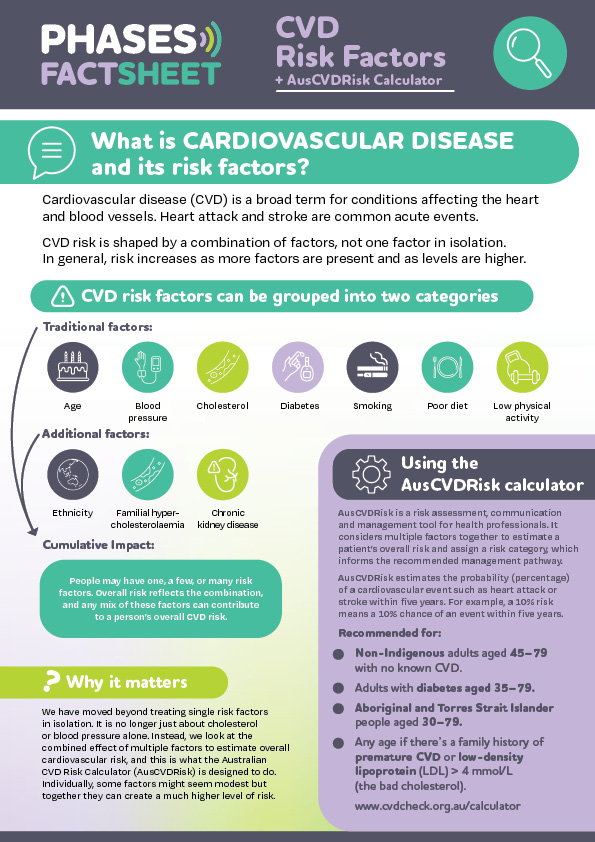
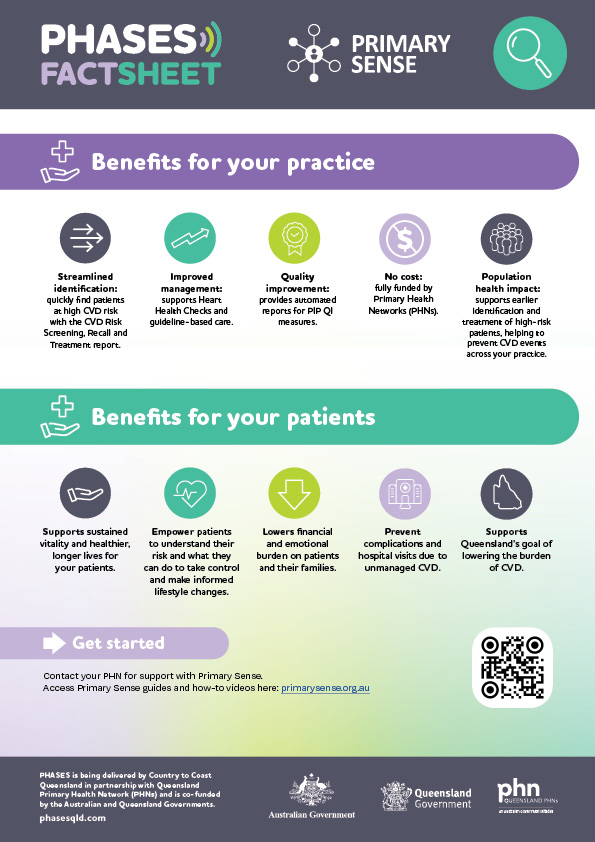
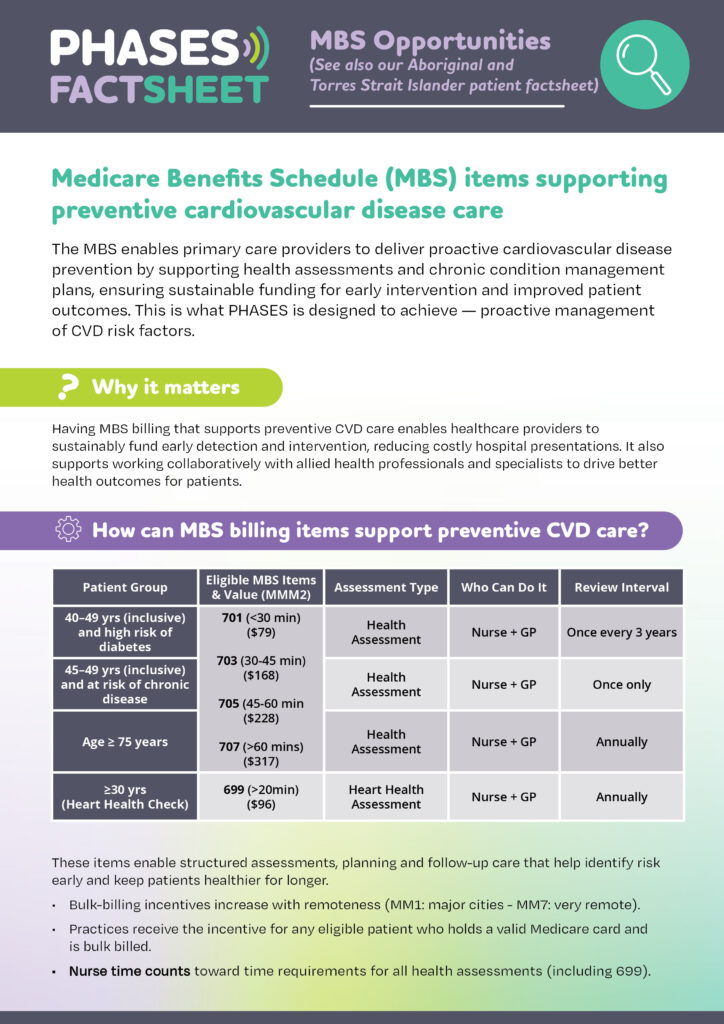
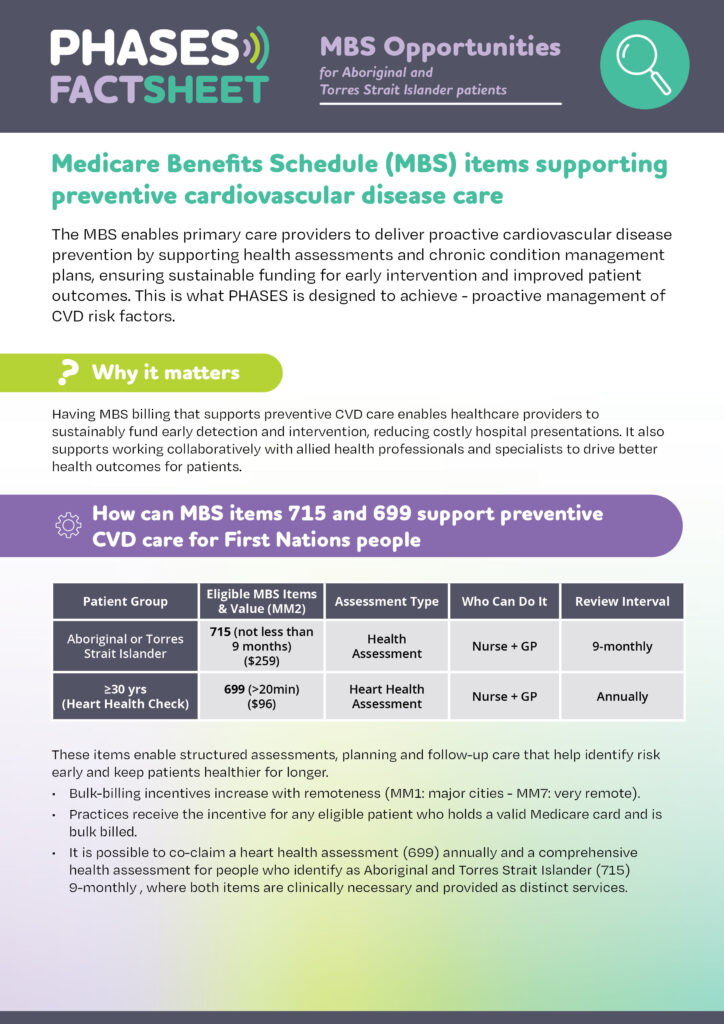
General Practice Factsheets
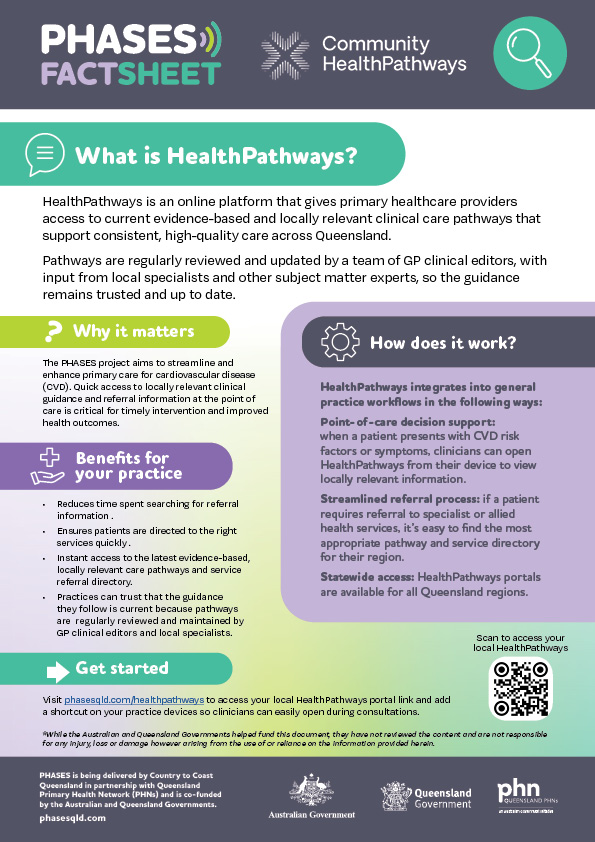
Practical guidance on PHASES tools and pathways to support cardiovascular risk assessment, early action and coordinated care in general practice.
General Practice Briefing Sessions: Webinar Recordings
We are delivering a 2025/2026 online education series to support staff in general practice, Aboriginal Community Controlled Organisations and Aboriginal Medical Services.
Catch up on past sessions below. Upcoming sessions are listed on our webinars page.
Webinar 1
Introduction to PHASES: 11 and 25 November 2025
Presenters
Professor Kim Greaves Cardiologist & Epidemiologist Sunshine Coast Health Dr Zoltan Bourne FRACGP, BMed, BSc Director Maleny Health / Maleny Doctors
Recording 1 (~35 minutes)
An overview of PHASES, how it supports proactive CVD risk assessment and the role your practice team plays in implementation.
Recording 2 (~26 minutes)
Live Q and A from both sessions, with presenters answering participant questions.
Webinar 2
Driving Quality Improvement in General Practice: 25 February 2026
Presenters
Kari Lusk Operations Manager – CPM AAPM (Certified PM) Montier Health
Recording 1 (~22 minutes)
Webinar 2 explores PHASES QI, including the latest Qld PHN developed Quality Improvement toolkit to identify, intervene and manage patients at risk of cardiovascular disease. You will gain an understanding of how to lead quality improvement activities to enhance cardiovascular disease prevention efforts.
Recording 2 (~20 minutes)
Live questions and answers with participants and Guest Speaker answering questions.
General Practice QI Toolkit and PDSA Template: CVD Risk Screening, Recall and Treatment
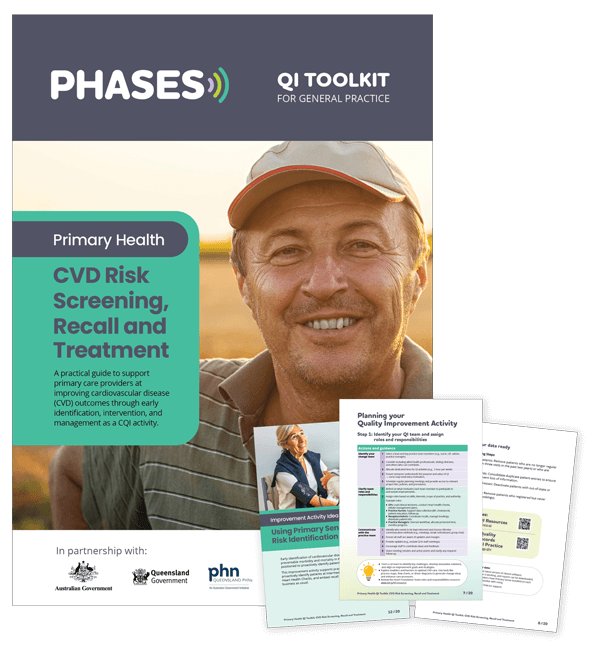
QI Toolkit
PDF, 20 pages, <1mb.
A practical guide to support primary care providers at improving cardiovascular disease (CVD) outcomes as a CQI activity. Printed copies available via your PHN.
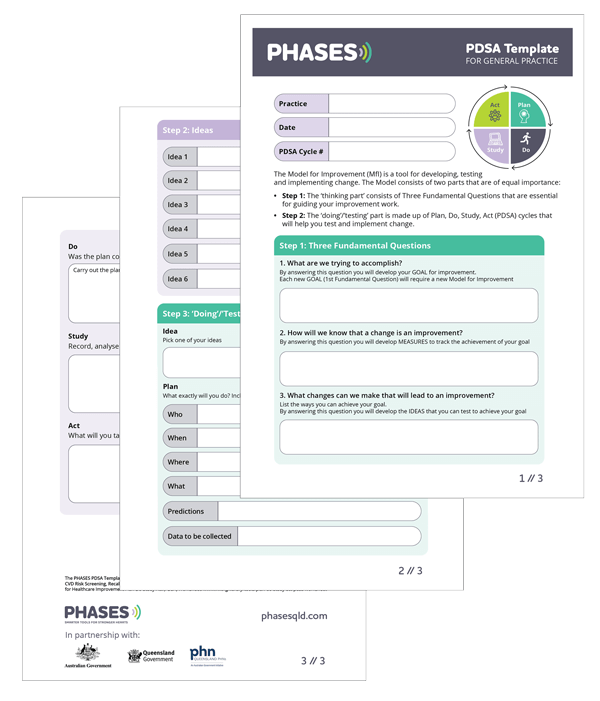
PDSA Template
PDF, 3 pages, <1mb.
A fillable-PDF that can be printed or downloaded. Uses the Model for Improvement (MfI) as the tool for developing, testing and implementing change.
Primary Sense Report
In February 2026, the new CVD Risk Screening, Recall and Treatment Report was deployed in Primary Sense, together with its User Guide.
The User Guide provides a walkthrough of the Report’s content and describes how it analyses your practice’s database for CVD.
Specifically, general practices can use this report to support targeted prevention activities, recalls, care planning and medication optimisation.
The report helps identify patients at higher risk of cardiovascular disease and highlights potential gaps in current care or treatment.
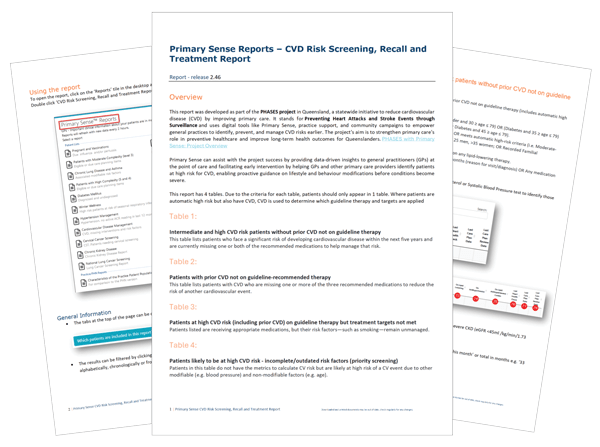
Primary Sense Report User Guide
PHASES and HealthPathways
HealthPathways supports PHASES by providing evidence based, locally agreed guidance for cardiovascular disease prevention and management. This includes clinical pathways and referral information to support consistent, high-quality care across Queensland.
Pathways are reviewed regularly by GP clinical editors, with input from local specialists and subject matter experts, so guidance stays current and trusted.
Access your local PHN HealthPathways portal below. We recommend adding it as a shortcut on shared practice devices so clinicians can open it quickly during consultations.
Getting started
New to PHASES
Watch a recording, visit the webinars page for upcoming sessions and subscribe for PHASES updates.
Using Best Practice or Medical Director
Contact your local PHN to install and set up Primary Sense (if not already installed).
Using another clinical system
You can still get involved by using your system’s reporting tools to identify patients at risk. Contact your local PHN who can help you decide the best approach.
Need help
Email phasesqld@c2coast.org.au or contact your local PHN.
Need more information?
Explore our FAQs for answers about participation, data security, clinical workflows and support for your practice.
FAQs
General program
What is the purpose of PHASES with Primary Sense?
PHASES — Preventing Heart Attack and Stroke Events through Surveillance — is an initiative focused on reducing the burden of cardiovascular disease in Queensland by leveraging Primary Sense a clinical decision support tool that uses general practice data to give patients the right care at the right time. Its core goal is to identify people at the highest risk of heart attacks and strokes early, so that healthcare providers can intervene sooner and manage risk factors more effectively. This proactive approach, aims to improve patient outcomes and contribute to better cardiovascular health across the state.
How does PHASES work with Primary Sense?
Primary Sense provides real-time clinical insights from practice data, enabling both opportunistic and systematic patient recalls for practices who use Best Practice (BP) and Medical Director (MD). These insights help guide targeted interventions for managing cardiovascular risk.
What if I don’t use or have access to Primary Sense?
If your practice doesn’t have access to Primary Sense (because you don’t use the Best Practice or Medical Director clinical systems), you can still participate in PHASES. Contact your local PHN or the PHASES team phasesqld@c2coast.org.au to explore alternative approaches and express your interest.
NB. For practices using Best Practice or Medical Director who do not have Primary Sense installed, reach out to your local PHN for assistance on installation and training. Primary Sense is fully funded, so General Practices do not incur any out-of-pocket expenses.
Who can participate in PHASES?
Primary Care providers across Queensland, including general practices, allied health professionals, Royal Flying Doctor Service, Aboriginal Medical Services and other Aboriginal Community Controlled Health Organisations. Cardiology Specialists within Queensland who see referred patients at risk are encouraged to participate. Participation is voluntary and supported by the PHN engagement teams.
What are the key benefits of joining PHASES
There are benefits to patients, primary care providers and the broader healthcare system including:
- Improved patient outcomes through early intervention.
- Access to cardiovascular risk assessment tools.
- More targeted treatment by identifying individuals at the highest risk of CVD.
- Contribution to a statewide initiative for cardiovascular health.
Implementation and support
How long will PHASES run for?
The PHASES project is funded until the 2028/29 financial year with most engagement activities planned for 2026, as teams help embed new workflows and practices. While the project itself will conclude, the goal is for proactive management of cardiovascular risk factors to become standard practice in primary care, ensuring the benefits of PHASES well beyond the project’s end.
What steps are involved in participating?
Any of these topic areas will give you a touch point to the PHASES initiative:
- Register for the next PHASES webinar series.
- Earn CPD and watch webinar recordings.
- Register your interest in receiving updates and education resources.
Contact your local PHN or mention PHASES the next time the PHN engagement team come to visit, or learn more at phasesqld.com
Who do I contact for assistance?
For general information and support contact your local PHN or contact our PHASES support team at phasesqld@c2coast.org.au
For technical support with Primary Sense, contact your local PHN. For support to access the AusCVD risk calculator, Australian cardiovascular disease risk calculator | AusCVDRisk.
If your PHN offers dashboards and you require assistance in utilising or accessing information, please contact your local PHN.
Training and education
What training and education resources can I access related to the PHASES project?
There are a range of resources you can access for more information. Visit the PHASES website for:
- Factsheets CVD risk factors, Primary Sense and the new CVD Report, MBS billing opportunities, HealthPathways
- Recordings of the webinar series
- QI Toolkit
You can also contact your local PHN or the PHASES team phasesqld@c2coast.org.au if you would prefer a more tailored education session.
Data and privacy
How is patient data protected under PHASES?
Primary Sense data is hosted on Primary Health Insights which is a data storage and analytics platform developed collaboratively by PHNs and hosted in Australia.
The platform provides leading edge data security and robust data governance to minimise the risk of data security breaches and unauthorised data management practices.
Data is de-identified and encrypted when it is extracted before it is forwarded to the database. Extracted de-identified data is stored in the Primary Sense Database, which is located in the cloud-based Microsoft Azure, in Australia.
Future developments
Where can I start?
Today! Practices can begin using Primary Sense or their clinical system’s reporting tools to identify and manage patients at risk of CVD. Ongoing support, quality improvement resources and regular updates will be provided to help practices embed proactive cardiovascular care into their routine.
How can I provide feedback or suggest improvements?
We welcome your input! You can share feedback through:
- Our online feedback form
- Emailing the PHASES team at phasesqld@c2coast.org.au
- Attending follow up webinars and Q&A sessions
Other
What role does the allied health sector play to help address the challenges in collaboration with General Practice?
The allied health sector has a vital role in supporting the lifestyle changes that may be recommended to managed CVD risk. To maximise impact, allied health professionals are encouraged to:
- Proactively connect with general practices in your local area or with practices that frequently refer clients, to discuss how you can support cardiovascular health and improve outcomes.
- Offer services that enhance the work of general practice. For example, exercise programs, point-of-care lipid profile analysis, blood pressure. Let practices know you are keen to support them.
- Participate in statewide referral networks and keep up to date with the PHASES project.
Will the AUSCVD Calculator be integrated into your clinical system?
Currently the AusCVDRisk calculator is NOT embedded as an application within clinical systems. However, it is possible to launch a web browser to access the AusCVDRisk calculator Australian cardiovascular disease risk calculator | AusCVDRisk.
Work is underway to enable seamless integration – so that fields can be prepopulated and a risk score automatically fed back into the clinical system. This work is separate from the PHASES project and therefore the exact timing of this integration is not currently available.
Does Primary Sense use the AusCVD risk tool to identify patients?
Currently the logic used in Primary Sense is the Framingham Risk Calculator which provides a more conservative estimate of cardiovascular risk i.e. it will overestimate risk and so there are no safety concerns that high risk patients will be missed. Work is underway to update the Primary Sense with the AusSCVDRisk tool logic.
Contact
Still need help or have a suggested improvement for our resources? Contact your local PHN or get in touch with our PHASES team.