

General practice has a unique role to play in reducing heart attack and stroke risk.
In our July newsletter, we highlighted that many patients living with cardiovascular disease (CVD), or at risk of it, remain untreated or under-treated. The good news? They are already visible in general practice.
This places general practice in a powerful position to act early by:
- Ensuring patients have up-to-date blood pressure and lipid results
- Using the AusCVD calculator to assess absolute cardiovascular risk
- Providing proactive preventive and management care
What can be done right now?
Primary Sense makes it possible to identify and support patients who may not yet have a CVD diagnosis but are at risk.
A practical first step:
Run the CVD reports in Primary Sense to identify patients aged 45–74 who have no CVD diagnosis but present with four key risk factors — smoking, high blood pressure, abnormal lipid levels, or diabetes.
This simple action can open the door to preventive conversations and earlier care.
What does the evidence say?
The evidence confirms the importance of acting now.
The Australian Institute of Health and Welfare (AIHW) July 2024 Report shows close to 60% of Australians aged 45–74 without a CVD diagnosis already have the necessary risk factors recorded in their GP record to enable a CVD risk assessment.
This highlights the significant opportunity to identify and manage high-risk patients through general practice.
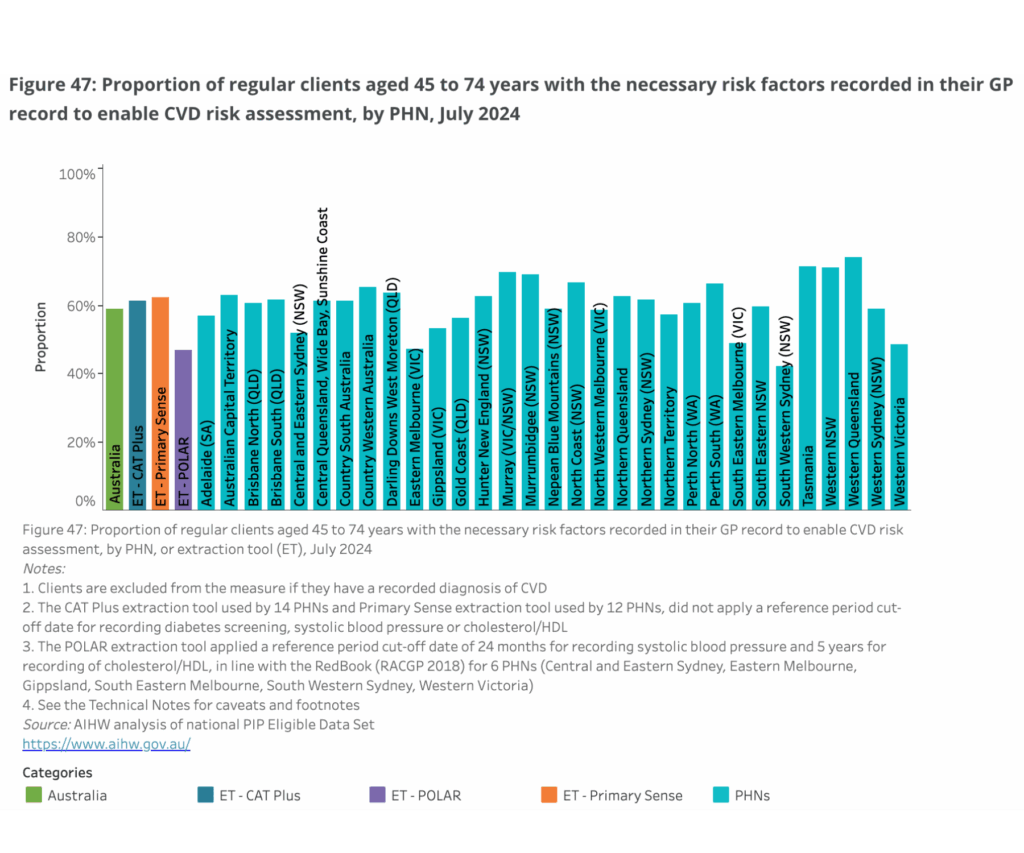
Source: AIHW (2024) Practice Incentives Program Quality Improvement Measures: annual data update 2023-24. Practice Incentives Program Quality Improvement Measures: annual data update 2023–24, QIM 8: Risk factors recorded for CVD assessment – Australian Institute of Health and Welfare Accessed 1/9/2025.